 Michael Christodoulides
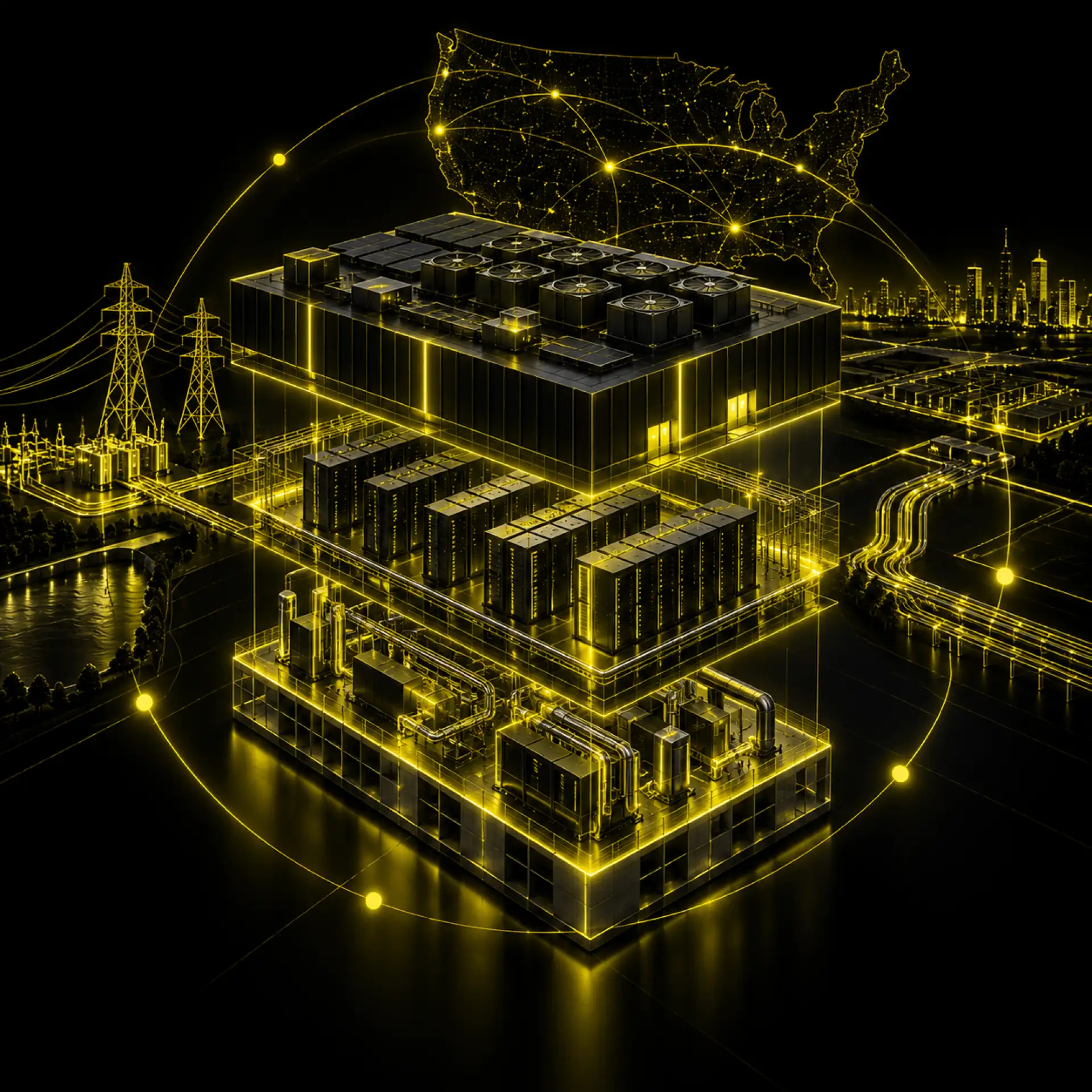
Live programs are messier. Stages overlap, decisions loop back and one weak hire early in the process can slow everything that follows.
For Empiric’s Data Centers USA team, the 12 stages are a useful way to talk about data center recruitment. Each phase creates a different hiring problem: who can build the business case, who can get land and power moving, who understands MEP at hyperscale, who can commission safely and who can keep the facility running once it’s live.
Why Does Data Center Recruitment Start Before A Site Is Selected?
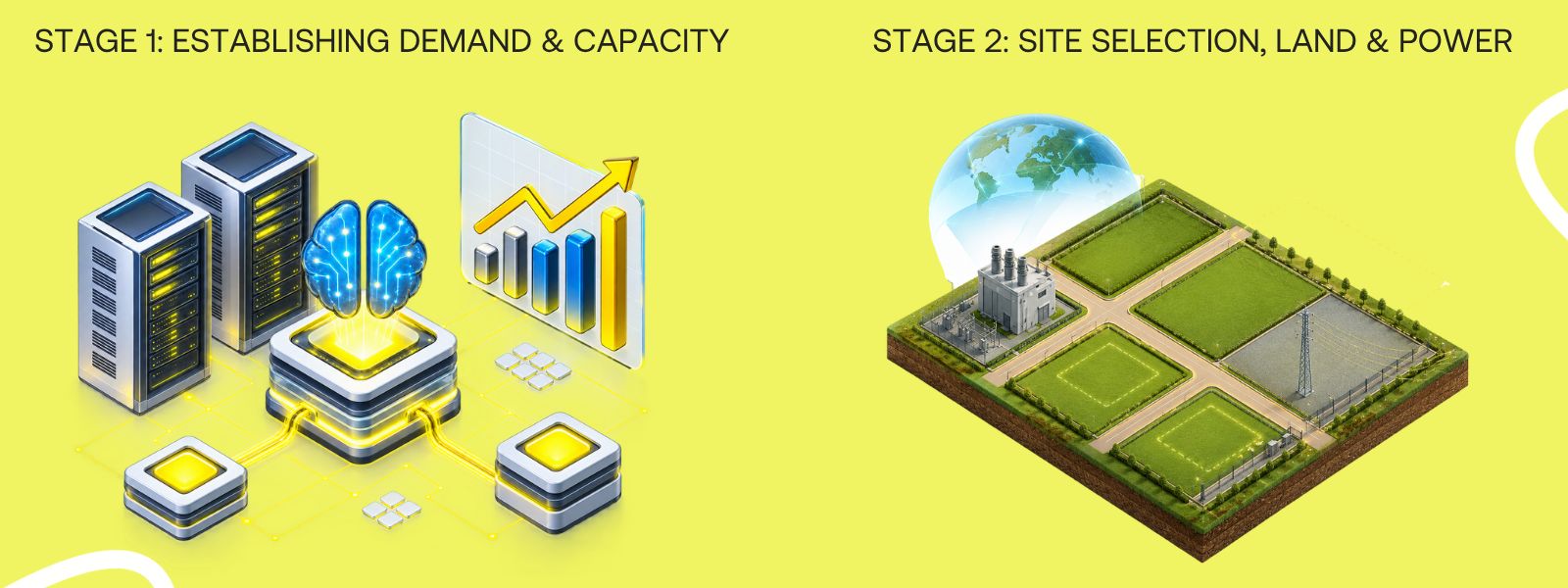
The first stage is the very beginning of the process. It’s about understanding who is leading these big projects, who needs the capacity and whether there’s enough commitment before anything really starts moving.
That can come from hyperscalers such as AWS, Microsoft, Google, Meta and Oracle, who know they’re going to need capacity for an AI build or another business reason. It can also come from developers and owner operators who build and own data center campuses, then lease that capacity to hyperscalers, AI and HPC companies.
Before a developer or owner operator starts that process, they need to understand where the demand is. Who needs it? Is it Oracle, Google, Amazon or another end user? What’s the purpose behind it, and why do they need it? If it’s external rather than in-house, there’s also the funding piece. Someone has to raise capital and get investment behind the project.
From a talent point of view, this is typically exec and C-suite level. VPs, CEOs and CTOs are putting business cases together, working out why the data center is needed, what the funding could look like and whether they need to raise capital. It’s also a timing issue. Companies want to get moving quickly, but they can’t start a project without knowing the map of the land.
There’s a scale point here too. Some of these projects are getting absolutely huge. The conversation is moving from megawatts to gigawatts, which changes the size of the build and the expectations on the people leading it.
Why Do Land, Power And Approvals Create Hiring Pressure Before Construction Starts?
Stage two is site selection, land and power. The land matters, especially in the US market where land costs are rising, but the price of land only gets you so far. If you can’t get power to it, it doesn’t really matter what the land costs.
That’s the basic problem. A site might look good because the land is cheap, but then the owner or owner operator still has to look at power, water, safety, roads, environmental conditions, approvals and whether people can actually work there.
Some sites are being chosen in very remote or derelict locations because the land is cheaper. That creates a bigger infrastructure issue around the project. If the nearest town is 100 miles away, someone still needs to think about where people are going to stay, where they’re going to buy food and how thousands of workers are going to get to and from site. People don’t want to work a 14-hour shift and then drive two or three hours back to the nearest town.
There’s also the community side. Depending on the state, companies may have to reinvest back into the community, especially when energy prices rise for people living nearby or when the scale of the campus affects the local area. In places with heavy data center density, people close to the sites can hear the buzz from the facilities because of the amount of power involved.
Safety and approvals can stop a project completely. One project was cancelled because the soil was contaminated and wasn’t safe to build on. That means the whole process has to start again. The same stage can involve legal approvals, tax incentives, checking the soil, checking the ground level and making sure the site is safe and sound.
For Empiric, that means getting the right person into the process early enough to help it move forward. At this stage, that can mean top execs or C-suite level professionals who can go out, win business, pull projects in and understand the legalities around getting everything signed off.
Where Do Design, Engineering, Estimating And Procurement Start To Affect Delivery?
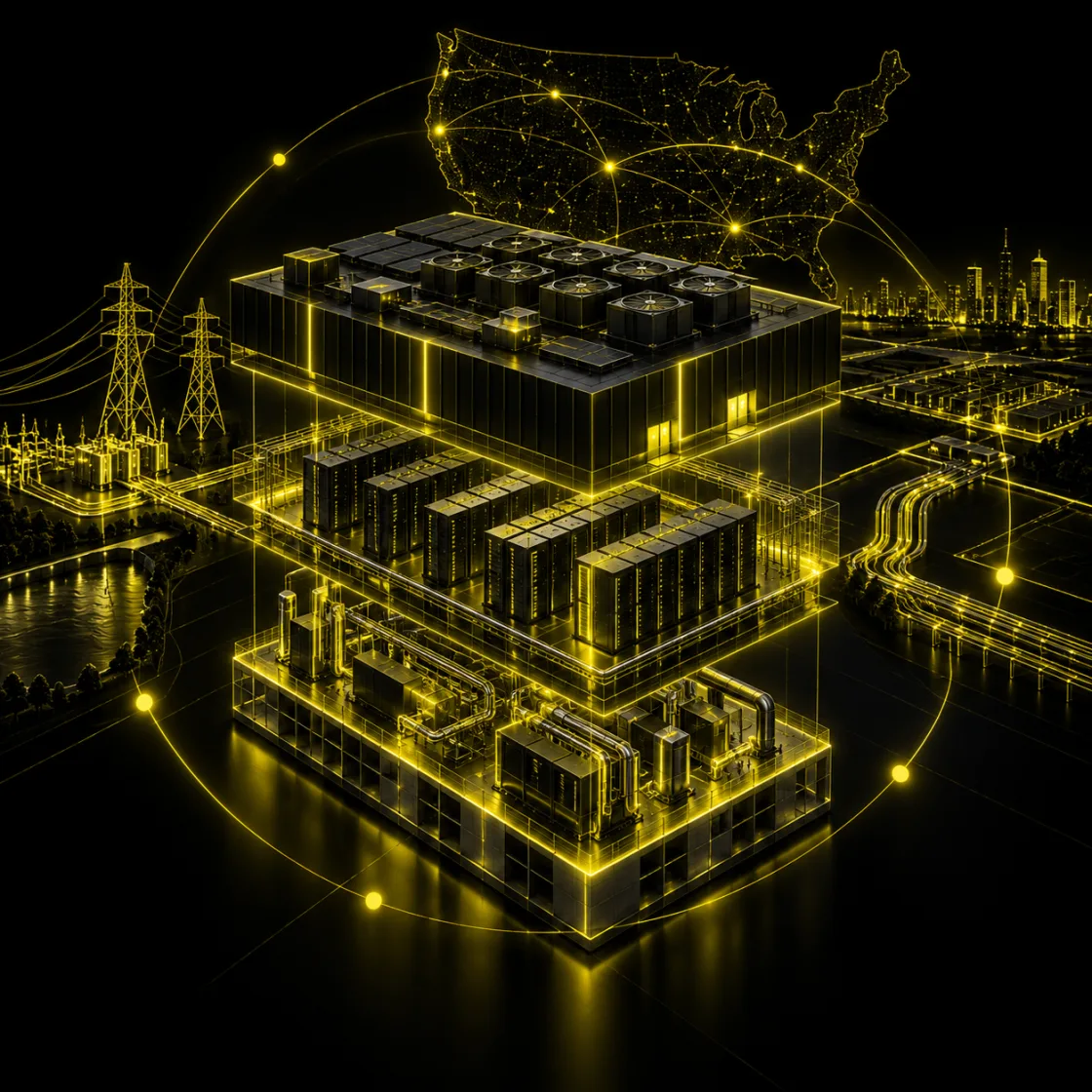
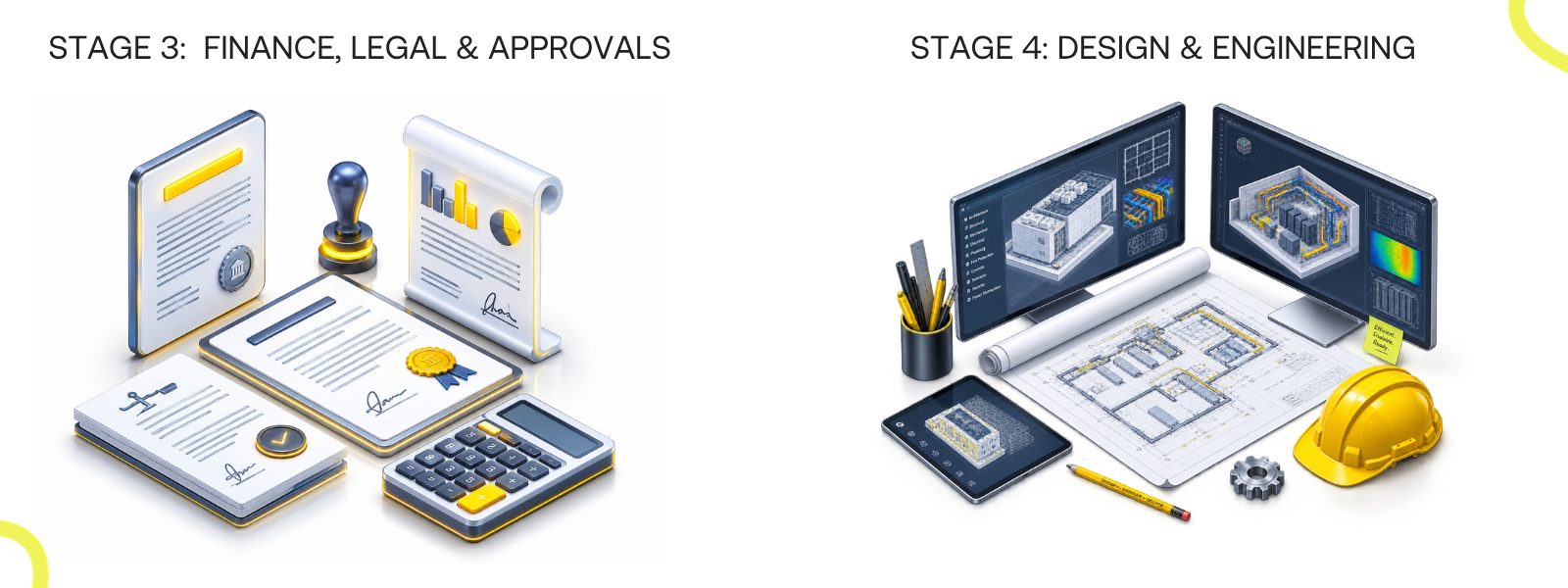
Design and engineering is where the plan starts to become more detailed. The building itself might look like a giant shed from the outside, but the complexity is in everything that sits around and inside it.
All the MEP scopes, CSA, installation phases and cooling requirements need to be right. The concept design has to be put together first, then regulated before the project can move into the next phase. You can’t just start digging up dirt without a plan.
This also loops back to demand and capacity. The architect can only design around what they believe the customer wants. If the customer says they need a certain size, wattage, number of buildings or rack density, the design follows that. If those requirements change later, the project may need more land, more power or a different setup.
Design problems can set back everything that follows. If there are delays getting approval on the design and engineering scopes, that affects preconstruction and estimating. If the team gets halfway through a project and realizes the measurements or sign-offs are wrong, it can set a data center back six or seven months, with a lot of cost attached.
This is where specialist consultancies and architecture experience come in. Empiric works with engineering and design engineering consultancies and firms across the US. The talent range starts at exec level and runs through electrical designers, mechanical designers and design engineers.
Estimating and preconstruction are slept on. At this stage, the owner might go out to five or six general contractors, and each GC has to mark up how much the project is going to cost. That includes materials, timings, schedules and what needs to happen month by month if there’s a 24-month deadline.
If the pricing is wrong, it can cause real problems. The owner or end user can drop the general contractor or subcontractor. If procurement gets knocked back and materials don’t arrive on time, that sets back when the materials go on site, when the install gets done and how much money the delay costs.
Procurement is also about finding the right subcontractors, the right general contractors and the right links in the market. That’s where recruitment starts to connect with market intelligence. It’s not only about putting talent in. It’s also about knowing which companies have a good reputation, which subcontractors are delivering and where clients should be looking. Across these phases, one mistake in one area can ruin the whole thing, so clients need people who know what they’re doing and can keep the process moving forward.
What Gets Underestimated In Civil, Site Development, Power And Cooling?
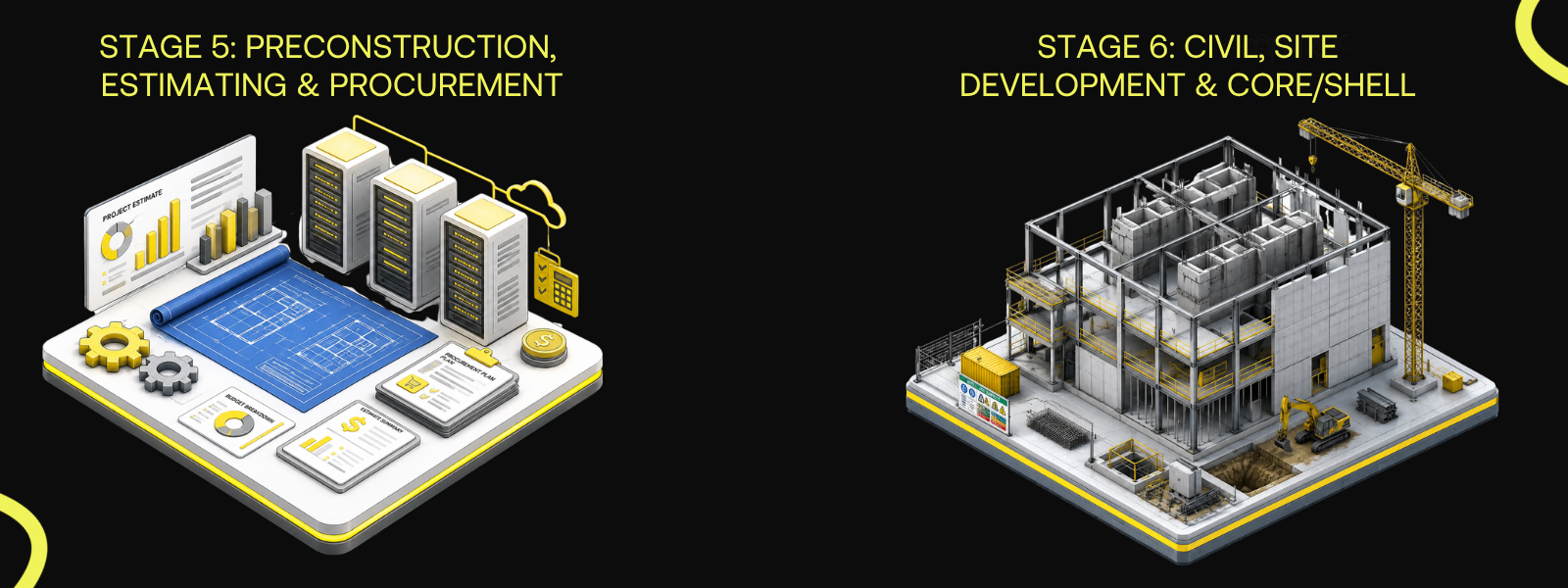
Civil, site development and core and shell is the ground-up part of the build. It’s getting the piping in, digging up the ground, building the roads and making sure everything can actually get to the site.
A lot of people hear civil site development and core and shell and think straight away about the building going up. Before the building goes up, there’s a lot of groundwork. The ground has to be level. There’s digging, drainage, roads, pipes and preparation before anyone starts putting steel frames up.
That can be as big as building the data center itself. If the site is in the middle of nowhere, roads, power routes and water routes can run for tens or even hundreds of miles. Small towns nearby may not have the capacity for the number of trucks, workers and equipment moving through them.
The structure and integrity of the building are also important because of what goes inside it. There can be hundreds of millions going into MEP, liquid cooling and control systems. If the structure isn’t safe, it’s a hazard. Weather conditions also change state by state, so a data center in Nevada or Arizona may need to be thought about differently from one in Ohio or upstate New York.
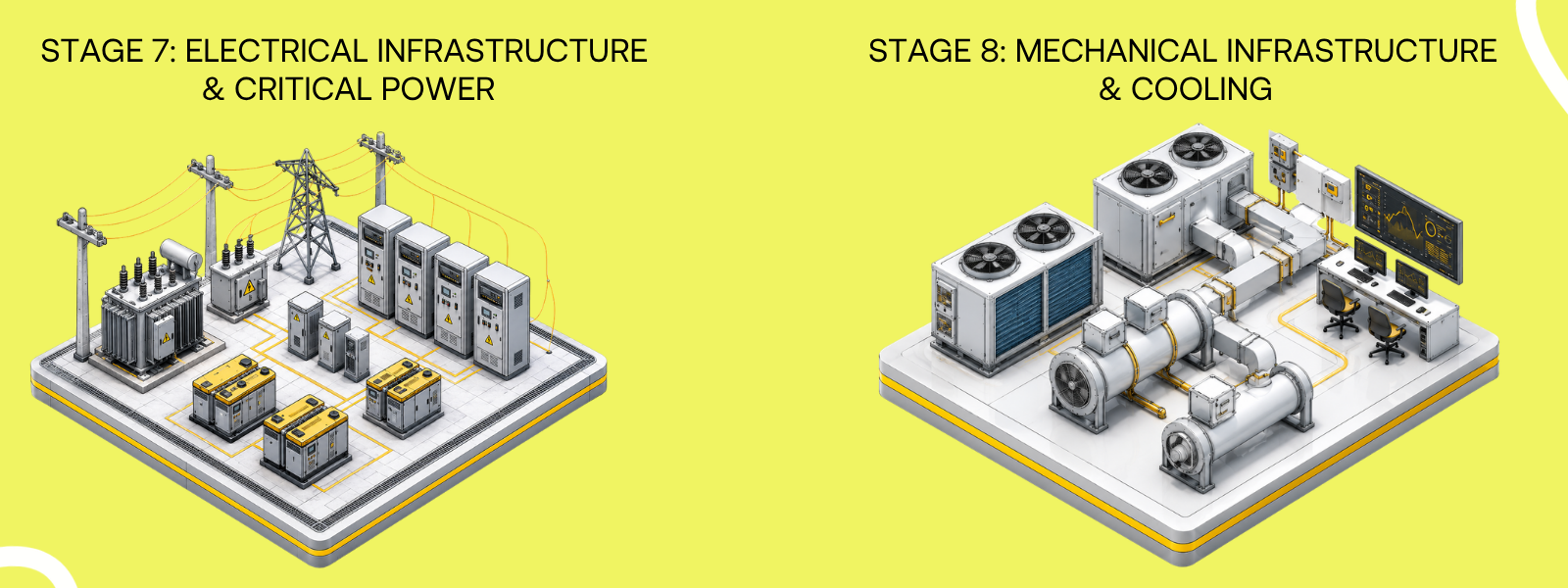
Stage seven is electrical infrastructure and critical power. The price of power and infrastructure is going through the roof, and data centers need to be powered 24/7 once they’re running. Companies are having to think outside the box, especially in the US.
There’s a push around internal power resources, building energy infrastructure, solar farms, gas turbines and internal turbines. Nuclear is also part of the conversation for the next five to ten years, because companies are going to have to find ways to make enough energy for the pipeline of demand coming through.
There’s an ethical side to this too. Power has to come from somewhere, and there are questions around how it gets prioritized when some cities are struggling for power and hyperscalers need the equivalent of a small city’s worth of energy. Renewable energy is part of that conversation, and this is where electrical subcontractors come in.
Cooling is another huge part of the lifecycle because of the amount of energy going into these facilities. That energy creates an insane amount of heat, and cooling has moved on from basic ventilation. Air cooling is still used, but liquid cooling and direct-to-chip cooling are becoming more relevant as data centers get bigger and rack densities increase.
When someone makes a payment on their phone, clicks on a website, buys clothes online or searches on AI, the servers behind that are running constantly. If the cooling isn’t right and servers overheat, it costs money to fix from a facilities side and can also cost the company reputationally if systems go down. Some facilities are also exploring immersion cooling.
Safety runs through all of this. It’s about the people, the locals and the land nearby, which is why commissioning and QAQC have got to be done at each stage. It’s not just at the end, flicking a few switches and seeing what happens. It has to be checked at every point. The best candidates are usually the ones who treat safety as the priority, because safety is paramount to the job they do.
Why Do Technology, Tenant Fit-Out, Security And Commissioning Need Niche Talent?
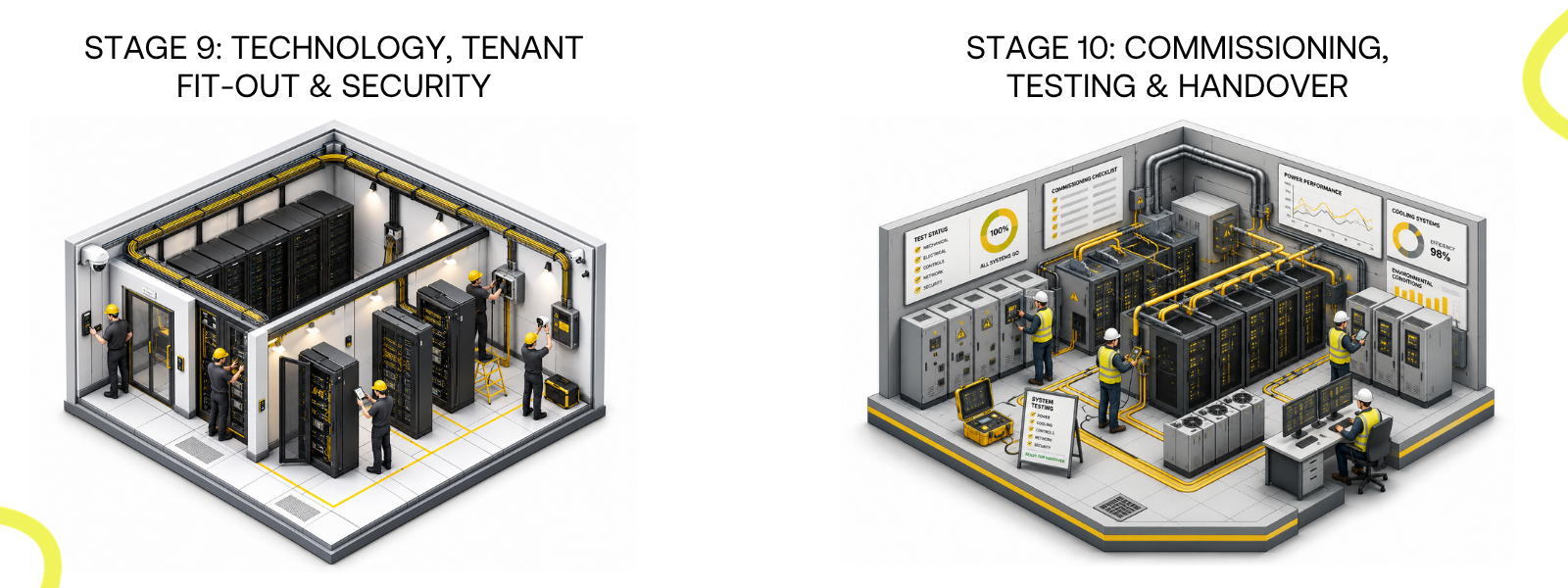
Technology, tenant fit-out and security is where the data center becomes more specific to the end user. A lot of owner operators have three or four different models they can build, then the hyperscaler comes in and chooses the version they want.
The tenant fit-out is the customization of the interior. Hyperscalers have their own products, servers and chips. Some are pushing their own semiconductor chips, and the data center has to be customized around what they want to run inside it. That can include their own servers, chips and liquid cooling requirements.
Security is massive. Control systems, remote access, lighting, CCTV and server security all sit together. Engineers may be able to control servers or systems without being in the data center, so security has to cover the facility and the technology inside it. These campuses can be worth billions, and they can’t have security breaches.
As new technology develops, companies only find weaknesses once someone finds them first. That’s why testing matters. Companies have people trying to break into their own systems so they can stay ahead of those weaknesses, because the data involved can include people’s personal information at a huge scale.
Commissioning, testing and handover then checks the quality of the installation and the safety of what’s been done. There are five levels of commissioning, L1 to L5. L1 to L5 covers the stages of testing, not the electrical path itself.
L1 is factory and component-level testing before equipment even reaches site. L2 checks that it’s been installed and started up correctly. L3 tests each system on its own, so a chiller or UPS performs as designed in isolation. L4 is integrated systems testing, where those systems are tested together and put under simulated failure conditions, like pulling utility power to see if backup kicks in properly. L5 is testing under full or live load once everything’s connected, usually the last check before handover.
If commissioning isn’t done properly, it becomes a safety hazard. If level one isn’t done properly, level two can’t go. If level two isn’t done, level three can’t go. Every stage has to be done properly and signed off.
Commissioning is also becoming a rare talent area. There isn’t the same surplus of commissioning professionals that you might find with project managers or superintendents, so clients need to think carefully about who is leading that work. Empiric works with commissioning consultancies, general contractors and subcontractors doing L1 through L5, and the leadership piece matters because the right people need to understand testing, handovers, protocol and standards.
What Does The Talent Plan Need Once A Data Center Is Running?
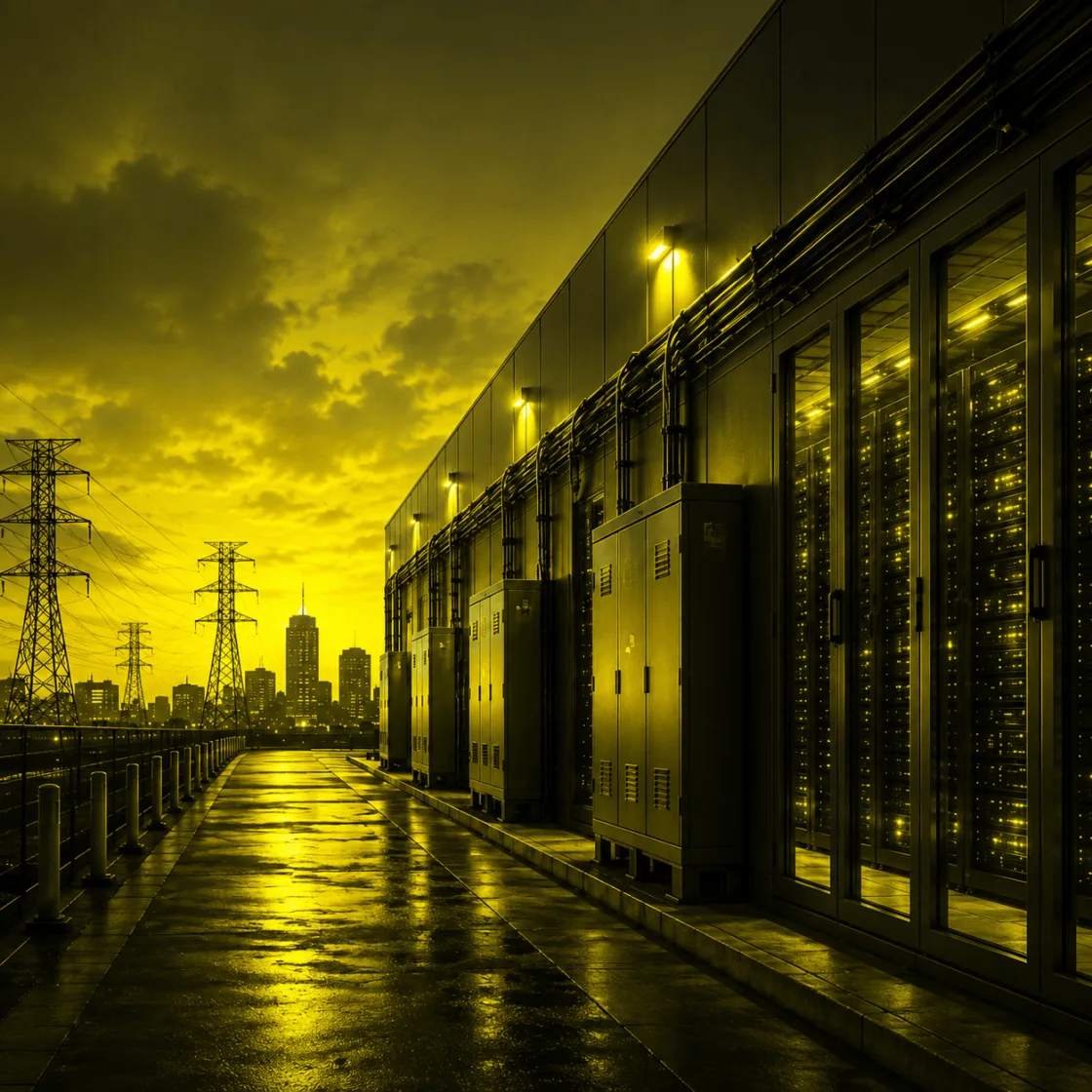
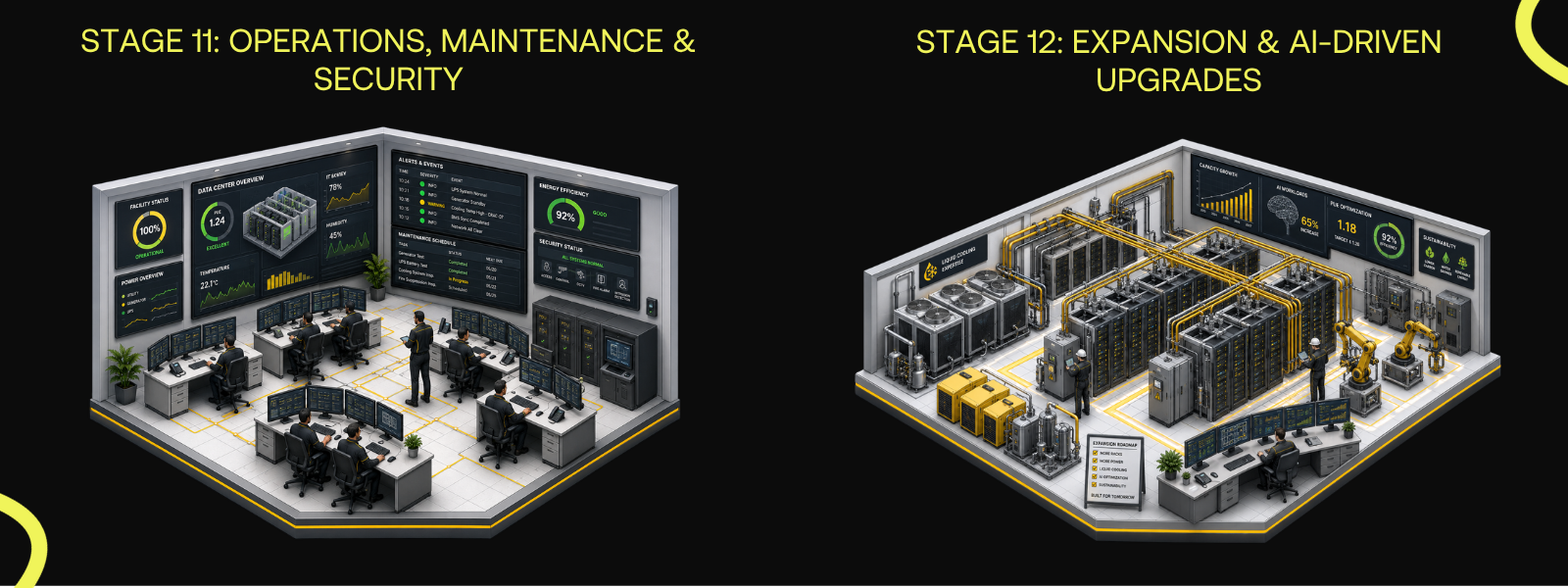
Once a data center is built and completed, it still needs people there. Operations, maintenance and security are about keeping the space safe, making sure there are no issues and having boots on the ground when something goes wrong.
That includes maintenance professionals, maintenance managers and maintenance superintendents. If a server breaks, or liquid cooling stops working, people need to be there to rectify the problem and get the servers back up and running.
It’s easy to look at the market and think about how much is being built right now, but there are already a lot of data centers operating and running. Building the product and getting it to work is one thing. Keeping someone in the driving seat to maintain it and prevent setbacks is another.
This stage is preventative. It’s being a step ahead with alarms, people changing over and making sure the facility isn’t unattended. It comes later in the lifecycle, but if it isn’t done properly, it can still set the project back.
Expansion and AI-driven upgrades are the final stage. Technology changes all the time. A customer might want a specific server or chip, then later realize they aren’t happy with what they’ve built or that the solution isn’t efficient enough.
If a hyperscaler has bought a large piece of land, built ten data centers and still has land available, it’s usually cheaper to build more buildings and increase capacity than it is to go through site selection, legal documents and the whole process again. The hard part has already been done, though they may still need sign-off from local or state governing bodies.
Expansion isn’t only about extra buildings. It can mean a different cooling system or a new technology solution. If a data center is running 24/7 for years, investing in a more efficient solution can save money over the long term.
For Empiric, this is where speed matters. If a client needs people for a new solution or for an expansion into new buildings, that can bring earlier-stage experience back into the process, including civil, core and shell and specialist solution experience.
Planning Data Center Recruitment Around A Live Build?
A data center hiring plan can’t be separated from the lifecycle. The people needed at demand and site selection aren’t the same as those needed for commissioning, tenant fit-out, operations or expansion. Waiting until each stage is already under pressure leaves very little room to move.
Empiric’s Data Centers USA team works with hiring managers and data center professionals across design, construction, MEP, commissioning, operations and expansion.
If you’re planning a build, scaling a delivery team or looking at the next stage of the data center market, connect with Michael Christodoulides and Giacomo Gray on LinkedIn, or book a call with the team here.